Slowly but surely, winter's cold cloak is lifting, making way for the long-awaited spring! We're not the only ones who notice this, our four-legged friends do too. Doggy ladies, in particular, are well acquainted with spring fever – some of them even in the dead of winter. Bitches go into heat 1-2 times a year. What actually goes on in a female dog's body during this vulnerable time? And how do you support your doggy lady during this period? In this blog post, we are dedicating ourselves entirely to the needs of the female sex.
Heat – what is it?
A female dog's heat, or "oestrus," consists of two phases of a cycle: proestrus and oestrus. Bleeding from the dog's vulva begins at the start of heat.
Unlike a woman's menstruation, the bleeding associated with a dog's heat should not be confused with the shedding of an unfertilized egg. Female dogs bleed at the beginning of their fertile phase because the uterine lining is being remodeled during this time. The bleeding originates from cells that have an enormous growth rate and can thus lead to small wounds.
When a female dog reaches fertility, her vulva swells, and her body begins to secrete a clear fluid, which prepares her for the upcoming oestrus and the reproduction that naturally accompanies it.
Although heat can last for about 18 days, a female dog is only fertile for an average of 5-6 days. Once the fertile days are over, the female dog won't even twitch her nose when the previously desired male dog gallops by.
What are the signs of a heat cycle?
Just like in humans, a female dog's first heat occurs during puberty. An exact age for the first heat can be determined – it happens when the dog's body decides it's ready.
While smaller breeds can reach their first fertile phase as early as 6 months, larger female dogs usually don't reach it until 10 months. But even here, every dog's body is individual.
The frequency of heat also varies. While small dogs might experience their estrus twice a year, larger breeds may only be fertile once a year.
Therefore, it's worth looking out for the following signs:
- 🐾 Mood swings
- 🐾 Refusal to obey
- 🐾 Seeks proximity to male dogs
- 🐾 Bleeding from the vulva
Everything your paw needs during heat
-
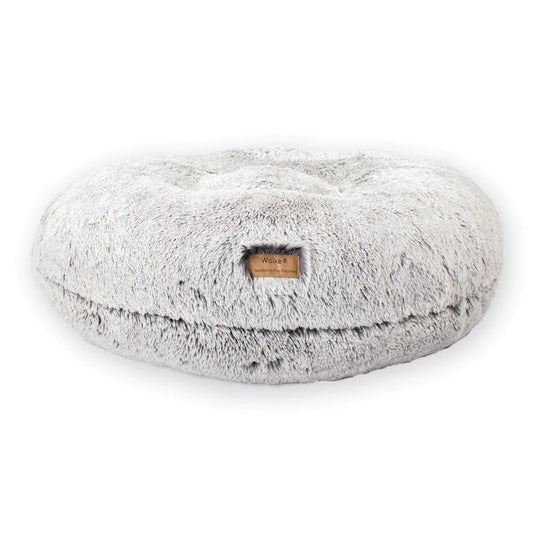
Dog cushion cloud shaggy - grey/white
Regular price CHF 399.00Regular priceUnit price / perSale price CHF 399.00 -
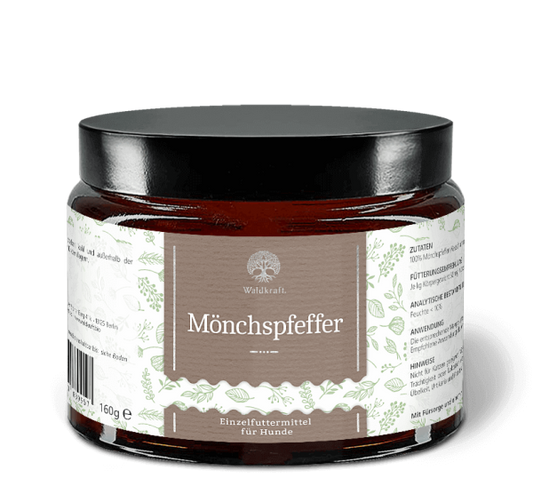
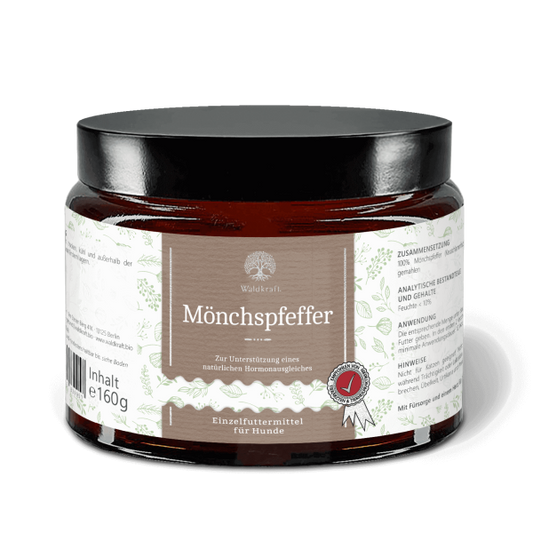
Chaste tree for dogs
Regular price CHF 27.90Regular priceUnit price / perSale price CHF 27.90 -
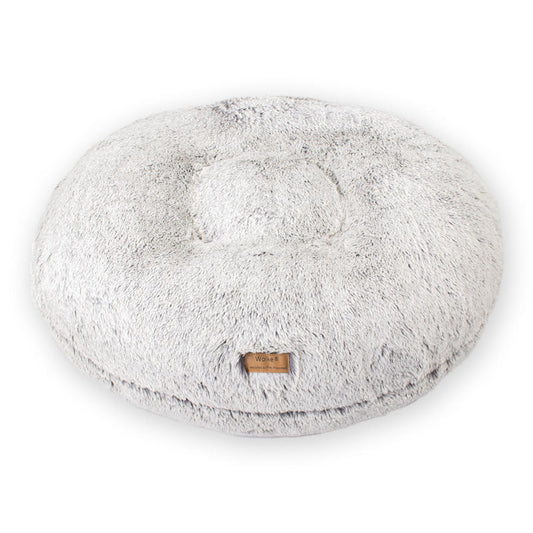
Dog cushion cloud shaggy - grey/white
Regular price From CHF 230.00Regular priceUnit price / perSale price From CHF 230.00
Why is a female dog fertile during her heat cycle?
A female dog's cycle can be divided into 5 phases:
Proestrus: During proestrus, the so-called follicular phase begins – a fertile cell forms and matures. The female dog shows mood swings and begins to bleed, her vulva swells.
Estrus: At the time of "heat," the egg cell is ready for fertilization and the bleeding changes to clear discharge. The female dog is ready to mate and shows this by lifting her tail more frequently and "presenting" herself; her vulva deswells. Whereas in the other four cycle phases the female dog will not allow herself to be mounted and bites away interested male dogs when they try, she will allow a male dog during estrus.
Metestrus: The uterine lining regenerates, and a phantom pregnancy can occur.
Anestrus: Resting phase of the ovaries, lasting 3-7 months depending on the dog.
Pre-proestrus: The next follicular phase announces itself. The female dog urinates more frequently, and the uterine lining becomes heavily supplied with blood.
What is a phantom pregnancy?
Regardless of whether a female dog was mated during her fertile period or not, her body releases the pregnancy hormone progesterone after her heat. As this hormone recedes, the hormone prolactin rises, which causes the
mammary glands of a female dog to swell.
Mammary glands develop, with which the
apparent offspring can be nourished. Phantom pregnancy is therefore a hormonally induced change that gives the female dog's body
signals that puppies are growing inside her.
At this point at the latest, the female dog develops typical maternal feelings and milk begins to come in. Because all these changes are quite uncomfortable, the dog starts licking herself, which in turn causes the glands to swell more and produce more milk.
A phantom pregnancy not only drains a female dog's strength, it unfortunately also often causes her to lose her appetite and the otherwise energetic paw to appear quite listless.
Meanwhile, they are busy building a nest for their imaginary offspring, using anything that is cuddly soft and within reach. A puppy substitute (cuddly toys, slippers, toys) is often sought out – and sometimes aggressively defended.
Symptoms of a phantom pregnancy:
- 🐾 Swollen mammary glands
- 🐾 Milk production/discharge
- 🐾 Female dog is very affectionate or apathetic, listless
- 🐾 Puppy substitute is sought and defended
What to do in case of a phantom pregnancy?
First of all, the owner should make their dog comfortable and create a stress-free environment. Light exercise, such as short walks and sniffing their surroundings, can take the paw off other thoughts. Because the mammary glands sometimes swell painfully, cool compresses can provide some relief if your dog allows it. Games, cognitive activities like snuffle mats, and Tierliebhaber's heat juice can work wonders.
Help for the pseudopregnant dog
-
Chaste tree for dogs
Regular price CHF 27.90Regular priceUnit price / perSale price CHF 27.90 -
Lick Mat Bones - Lick Mat
Regular price CHF 19.90Regular priceUnit price / perSale price CHF 19.90 -
Lick Mat Camp - Lick Mat with Suction Cups
Regular price CHF 19.90Regular priceUnit price / perSale price CHF 19.90 -
Lick Mat Heart - Lick Mat
Regular price From CHF 15.90Regular priceUnit price / perSale price From CHF 15.90
Are bitches in heat allowed to visit the pack?
Although we advise our customers to care for their female dog at home during this sensitive time, female dogs in heat are always welcome at the Villa. There, they will have their very own "girls' group" with a private run and will be able to cuddle up more in the warmth and have very close contact with our staff.
Do you have questions about your dog's heat cycle? We'll be happy to answer them!
Image Sources:
Image 'White Dog in Field': Barcs Tamás / Unsplash
Image 'Dog in Flower Meadow': Vien Dinh / Unsplash
Image 'Dog with Stick in Meadow': Maëva Vigier / Unsplash