

Administering medication made easy!
7 Tips for Administering Tablets & Medications
Film-Coated Tablets & Capsules
Mix into feed
The oldest trick in the book? Perhaps, but for good reason. Many dogs barely notice the film-coated tablet or capsule when it disappears into their meal – just like us back in the day, when we'd swallow that often-bitter pill with something to mask the taste.
Sometimes it's also enough to store the tablet overnight in the same container as the food, so it absorbs the food's taste and your furry friend accepts the medication.
If your furry friend doesn't have much of an appetite due to their illness, simply offer them a small portion with the medication in it first, which you can then supplement with the normal amount of food if needed.

Administration by injection
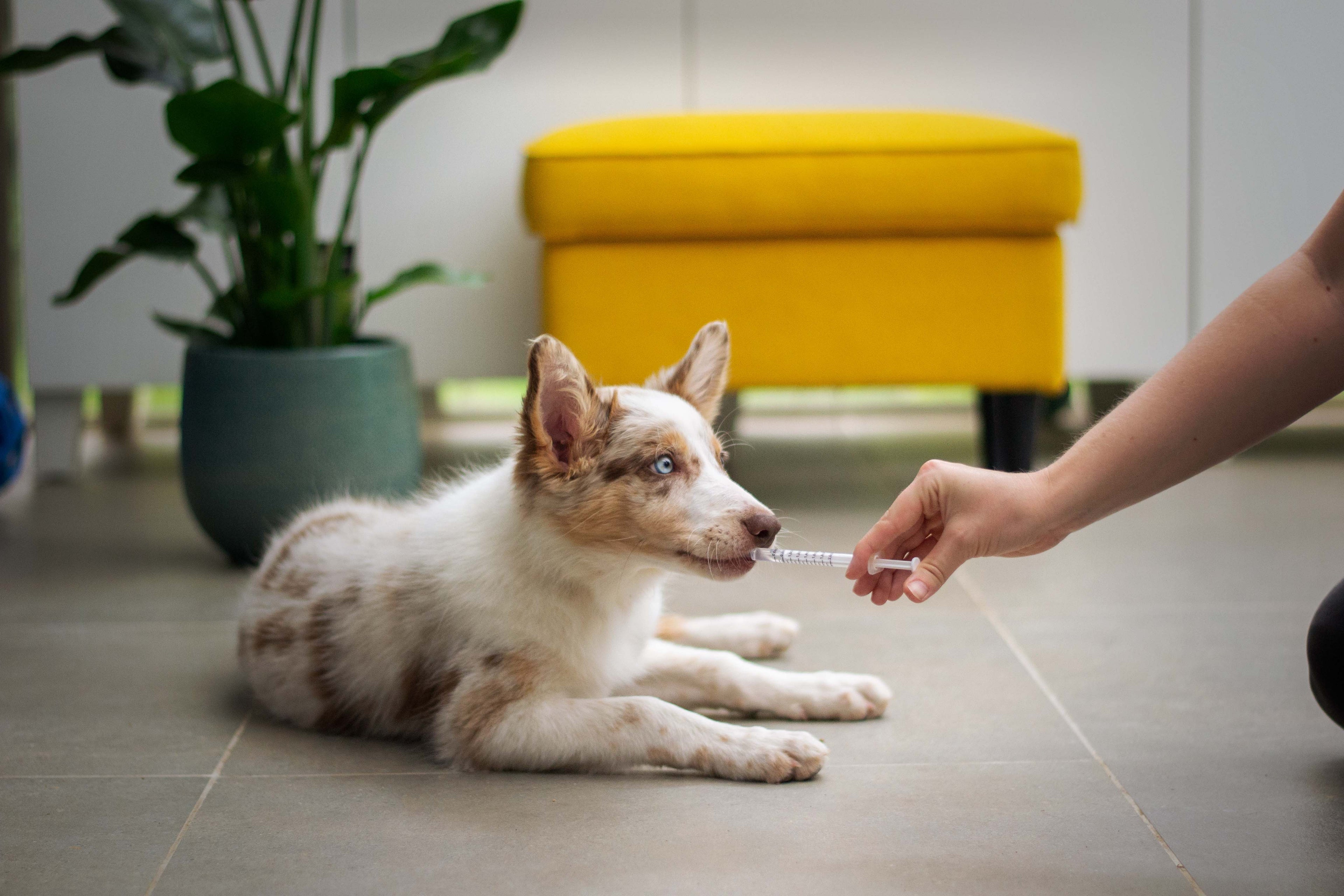
If the tablet is repeatedly found and spat out or not eaten, it is advisable to dissolve the tablet in liquid and then put it into a syringe (without a needle!) or a pipette, which you can use to drip the contents into your pet's mouth.
This option has the advantage that the contents cannot be spat out again, but it requires your furry friend to let you open their mouth.

Train the command 'mouth open'
If you haven't yet trained your pawed friend to the 'open mouth' command, giving them pills could serve as a good impetus to do so. Ideally, however, you should practice the command before an illness occurs.
To get your furry friend used to having their muzzle touched, first sit in front of your pawed friend and place your two thumbs behind the canine teeth, between the teeth, pulling the lips back at the same time.
As a first step, it's a good idea to just observe your four-legged friend's mouth from this position so they can get used to the procedure and the touches.
Once your pawed friend is familiar with this, you can now place the pill or capsule right at the back of the tongue. Make sure the medication is actually swallowed.
to make into a ritual
As every dog owner already knows: dogs love routines. Anything that has a fixed sequence is more readily accepted by the paw (and even more so if a treat is involved).
"Develop a routine and administer pills?", some might now ask themselves. Of course, developing a routine with a sick paw is not ideal – and that's precisely why it's a good idea to train such a routine before the paw needs medication.
For example, if your paw gets a treat once a day, make sure this happens as consistently as possible at the same time and – you guessed it – a routine develops from it. This way, you can hide the pill in a treat if needed and administer it at the usual time.
With these treats, your dog will forget that medication is involved:
-
Analdrüsen Drops - Funktionssnack für Hunde
Regular price CHF 43.50Regular priceUnit price per -
Baby's mini bones
Regular price CHF 6.90Regular priceUnit price per -
BEDTIME COOKIES 400 g
Regular price CHF 9.50Regular priceUnit price per -
Beijinhos - Sardine & Pork Dog Treats
Regular price CHF 4.50Regular priceUnit price per



Eye and ear drops
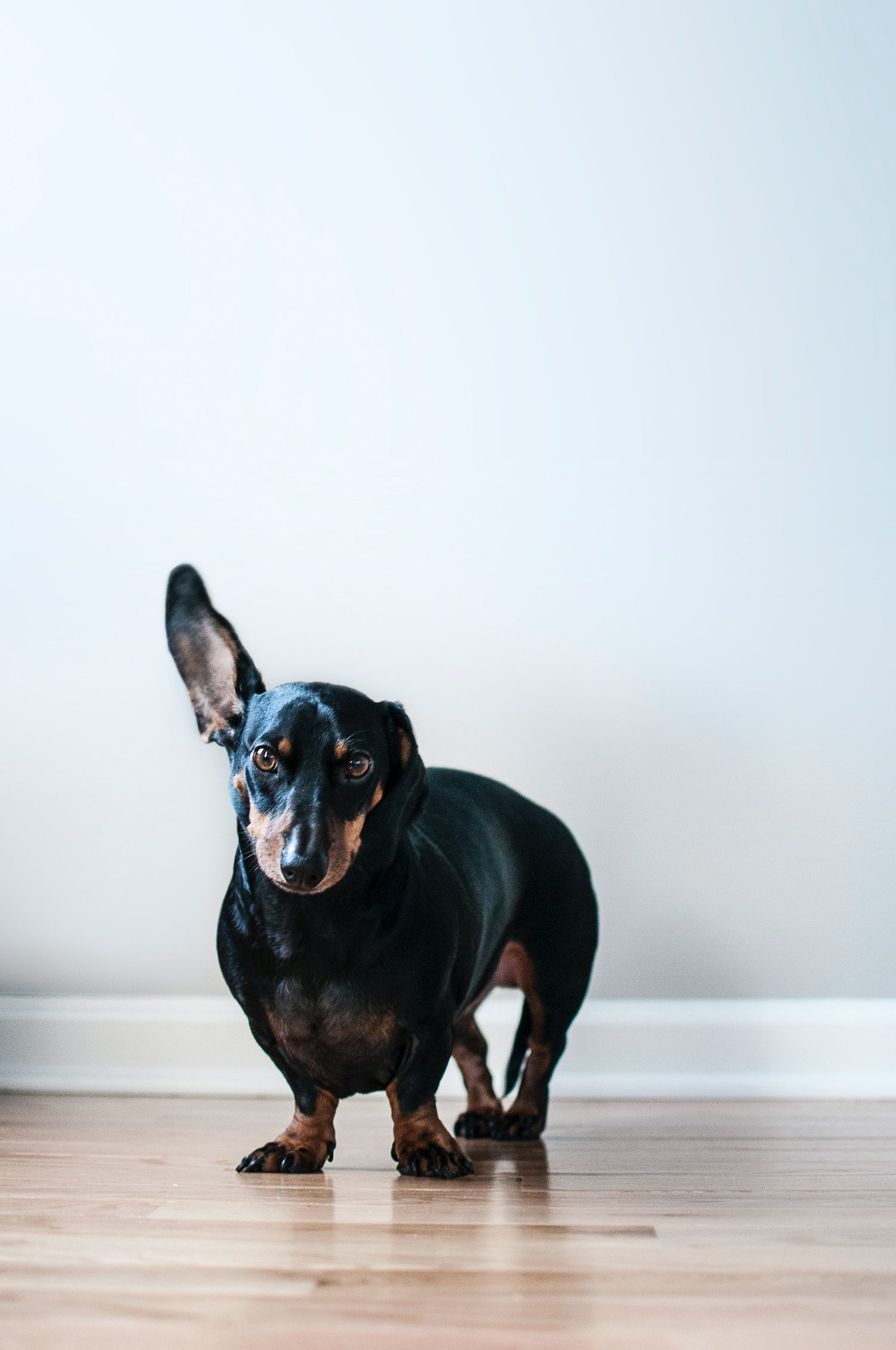
Ear drops
What a dog learns as a puppy, it knows for life. That's precisely why it's a good idea to accustom your furry friend to ear touches early on, as almost every four-legged companion will experience ear problems at some point in their life. In any case: your pet will receive a reward at the end of the treatment to make it a positive experience.
To begin, gently take hold of your paw's ear and lift it (if not erect ears). Then, guide the tip of the applicator to the ear. Be careful never to go deeper into the ear, as this can damage your dog's hearing. If your paw's ears are sensitive, you can dilute the solution with water.
Drops in the ear? Great! Now just gently massage them in briefly, give a treat, and you're done! By the way: your dog can shake its head afterwards without any worries.
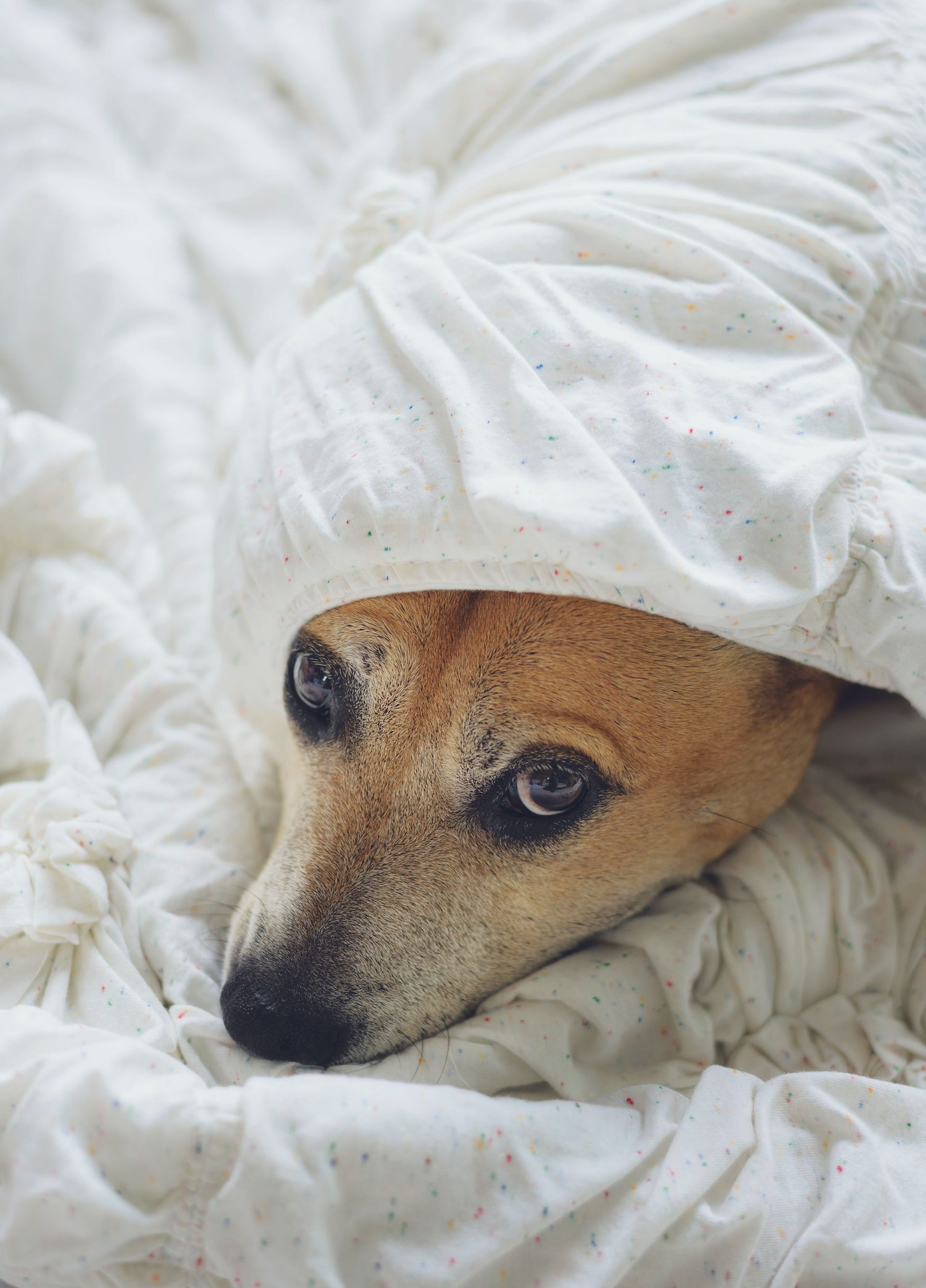
Eye drops
As with all other medications, it is advisable to administer eye drops in a quiet environment and relaxed atmosphere. Your greatest help here is your patience and your own relaxation. If your furry friend senses that you are nervous, they will likely mirror your feelings.
First, kneel in front of your dog and place your hand under their muzzle. With the thumb of the same hand, gently pull down the lower eyelid, thus opening the conjunctival sac.
Now, carefully drip the drops into the eye and then let your furry friend blink until their vision has normalized before moving on to the other eye.
Important: Don't forget a treat at the end!
Administering ear and eye drops is much easier, by the way, if there are two of you. But if you don't have a brave helper by your side, why not try the fun option in the video below?

